

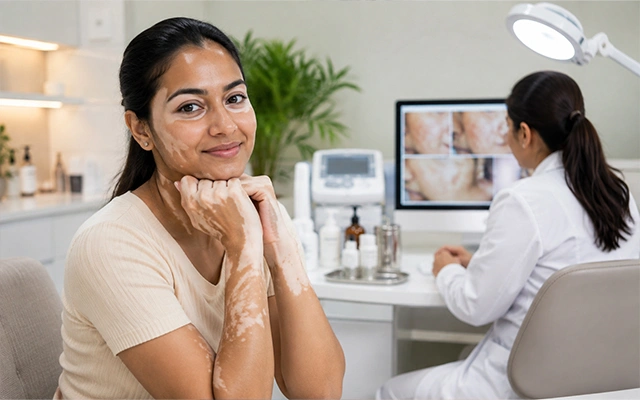
Vitiligo can be unsettling, especially when a small pale patch begins changing, or new patches appear elsewhere. One of the first questions people ask is whether the lost colour can return.
The answer is encouraging, but it needs realistic expectations. Vitiligo does not currently have a guaranteed permanent cure. However, modern treatment can help control its progression and encourage natural skin colour restoration in many people. The response varies according to the type of vitiligo, the location of the patches, how long they have been present and whether the condition is still active.
That is why treatment should begin with proper assessment rather than trying random creams or remedies.
What Is Vitiligo and Why Does It Happen?
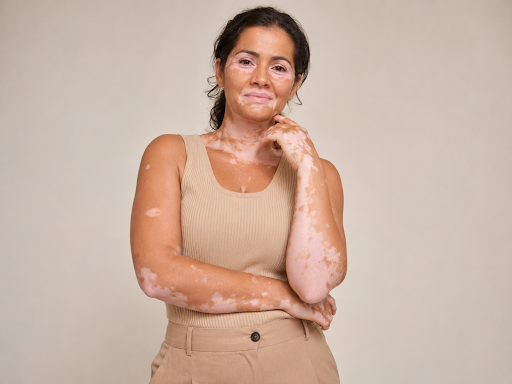
Vitiligo is a long-term condition in which areas of the skin lose melanin, the pigment responsible for normal skin colour. Skin depigmentation appears as pale or white patches, commonly affecting the face, hands, around the eyes and mouth, body folds and genital areas. Hair growing within a patch can sometimes turn white as well.
Vitiligo is considered an autoimmune skin condition. The immune system mistakenly attacks melanocytes, the cells that produce melanin. When these cells become damaged or are destroyed, the affected skin gradually loses its colour.
It is important to remember that vitiligo is not contagious and cannot spread from one person to another through contact.
Understanding Vitiligo Causes and Symptoms
The exact reason why someone develops vitiligo is not always clear. Genetics and immune-system activity are thought to play important roles. Vitiligo can also occur alongside other autoimmune conditions, including thyroid disorders and type 1 diabetes. In some people, skin injury, burns, scratches or repeated friction may trigger new patches.
Common symptoms to be aware of include:
- Clearly defined pale or white patches on the skin
- Gradual enlargement of existing patches
- Development of new patches elsewhere
- Loss of pigment around the eyes, mouth, hands or joints
- Whitening of hair within affected areas
- Occasionally, itching before a new patch appears
A dermatologist may use clinical examination and sometimes a Wood’s lamp to distinguish vitiligo from other causes of light-coloured skin.
Can Vitiligo Be Treated? Setting Realistic Expectations
Yes. Vitiligo can be treated, although treatment does not produce identical results for everyone. The main goals are to limit the appearance of new patches, prevent existing patches from enlarging and encourage pigment to return. Repigmentation happens gradually rather than overnight. The face and neck frequently respond better, while areas such as the fingertips, toes and other hairless regions can be more difficult to repigment.
If you are searching online for a vitiligo cure or permanent treatment, be cautious of promises of guaranteed results. Current medical treatments may restore considerable pigment, but vitiligo can recur, and maintenance treatment may sometimes be required.
Medical Treatment Options for Vitiligo
There is no single treatment that is suitable for every patient. A dermatologist chooses treatment after considering the person’s age, affected areas, type of vitiligo and whether the condition is stable or progressing.
Topical Treatments and Creams
Topical treatment may suit vitiligo when it affects limited areas. For instance, topical corticosteroids can sometimes help slow pigment loss and encourage some colour to return. As prolonged or inappropriate steroid use can thin the skin and cause other side effects, these medicines should be used only according to a dermatologist’s instructions.
Phototherapy (NB-UVB) for Repigmentation
Vitiligo phototherapy (NB-UVB) exposes affected skin to carefully controlled narrowband ultraviolet B light. It can be considered when vitiligo is widespread, when topical treatments alone have not provided sufficient improvement or when the condition significantly affects quality of life. Treatment usually requires repeated sessions over several months because repigmentation develops gradually. NB-UVB may also be combined with selected topical medicines depending on the patient’s condition.
Excimer Laser Treatment
Vitiligo laser treatment using an excimer laser allows ultraviolet light to be directed towards smaller, selected areas instead of exposing larger areas of unaffected skin. This targeted approach can be useful when patches are localised. Several sessions are usually necessary, and response varies according to the location and activity of the condition. The face and neck generally respond more favourably than fingertips and toes.
Oral Medications and Immunomodulators
When vitiligo is spreading rapidly, a dermatologist may sometimes consider oral medication to help suppress the immune activity contributing to further pigment loss. For example, corticosteroid medicines may be used in carefully selected cases to slow rapidly progressing disease. These medicines are not suitable for self-treatment because their benefits need to be balanced against possible side effects.
Surgical and Advanced Options
For stable vitiligo that has not responded adequately to medical treatment, advanced skin repigmentation treatment may be considered.
Options can include skin grafting or transplantation of melanocytes from normally pigmented skin to depigmented areas. These procedures are generally considered only when vitiligo has remained stable, without new or enlarging patches for a prolonged period.
Repigmentation following cell transplantation is gradual. According to the American Academy of Dermatology, much of the colour may return within about six months, although improvement can continue for up to a year. (Source)
Natural and At-Home Approaches — Do They Work?
Searching for vitiligo home remedies can bring up claims involving herbs, oils, supplements, restrictive diets and other DIY methods.
At present, there is not enough reliable evidence to show that a particular diet, vitamin, supplement or home remedy can reliably restore pigment or cure vitiligo.
Healthy food, good sleep and general wellbeing are valuable, but they should support—not replace—medical care.
Sun protection is particularly important because depigmented skin contains less protective melanin and can burn more easily. High-SPF sunscreen, suitable clothing and sensible sun protection should therefore form part of everyday skin care.
How Long Does It Take to See Results?
Vitiligo treatment requires patience. Visible repigmentation usually develops over months rather than days or weeks. NB-UVB phototherapy, for example, may involve two or three sessions weekly (Source) and often continues for many months. Some people require treatment for a year or longer.
The speed of improvement depends on where the patches occur, how long they have been present, whether pigment-producing cells remain around hair follicles and how consistently the prescribed treatment is followed.
Regular photographs and dermatologist reviews can help determine whether treatment is working even when day-to-day changes are difficult to notice.
When to See a Dermatologist
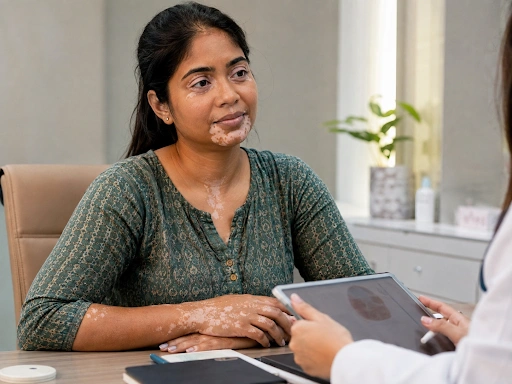
Do not wait for vitiligo to become extensive before seeking medical advice. Consider seeing a dermatologist when:
- A new white patch appears without an obvious explanation
- Existing patches are becoming larger
- New areas are appearing quickly
- The face, hands or other visible areas are affected
- Previous treatment has not helped
- You are unsure whether the patch is actually vitiligo
- Changes in skin colour are affecting confidence or emotional wellbeing
For people searching for the best vitiligo doctor, the priority is finding a dermatologist who assesses whether the condition is active and identifies its type.
Living with Vitiligo and Moving Forward
Modern dermatology offers several ways to control progressing vitiligo and encourage natural pigment to return. From topical medicines and NB-UVB phototherapy to excimer laser and advanced repigmentation procedures, treatment can be adapted according to the location, extent and activity of the condition.
If you have recently noticed white patches, existing vitiligo is spreading, or previous treatment has not produced the expected improvement, medical evaluation is necessary.
I provide personalised vitiligo assessments and can guide patients through appropriate topical, phototherapy, laser, and advanced treatment options.
Schedule a consultation in Kolkata today.
Frequently Asked Questions
1. Is vitiligo completely curable?
There is currently no guaranteed permanent cure for vitiligo. However, treatment can help control progression and restore pigment in many people. Some patients may need maintenance treatment because pigmentation can reduce again over time.
2. What is the most effective treatment for vitiligo?
There is no single most effective treatment for everyone. Topical medicines, NB-UVB phototherapy, excimer laser and selected advanced treatments may all be helpful. The most suitable option depends on the type, location, extent and activity of vitiligo.
3. Can diet or natural remedies help repigment the skin?
There is currently insufficient evidence that any specific diet, supplement or natural remedy can reliably restore pigment in vitiligo. A balanced diet can support general health but should not replace dermatologist-recommended treatment.
4. How long does vitiligo treatment take to show visible results?
Results usually develop gradually over several months. Phototherapy and other repigmentation treatments often require repeated sessions, and some treatment plans may continue for a year or longer.
5. Does vitiligo spread if left untreated?
Vitiligo behaves differently from person to person. It may remain stable for years, progress slowly or sometimes spread more quickly. As its course cannot always be predicted, new or enlarging patches should be assessed by a dermatologist.