

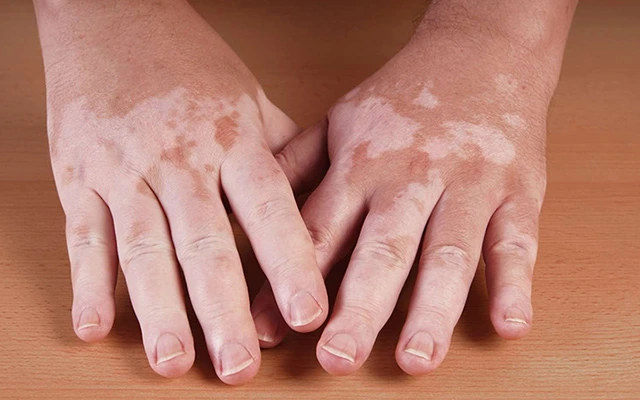
Vitiligo treatment is not like treating a wound that heals overnight or an infection that disappears after a few days of medication. The journey of vitiligo repigmentation often happens gradually, and the changes can be so subtle that patients may not notice them at first.
Many people look at their skin every day and wonder, “Is my treatment actually working?” or “How long does vitiligo treatment take to work?” This is where dermatologists play an important role. They do not rely only on visible changes but use detailed assessments, photographs, examinations and clinical experience to understand whether the condition is improving.
Tracking progress helps doctors know whether pigmentation is returning, whether the disease has become stable, and whether adjustments are needed in the vitiligo treatment plan for better outcomes.
Wondering How Your Dermatologist Actually Knows If Your Vitiligo Is Improving?
When you visit a dermatologist for vitiligo follow-ups, the evaluation goes beyond simply checking whether white patches look smaller.
A dermatologist observes multiple factors, including:
- Whether new patches are appearing
- Whether existing patches are spreading
- Whether tiny areas of pigmentation are returning
- How evenly colour is coming back
- Whether different body areas are responding differently
Vitiligo improvement is usually measured over months rather than days. A small brown spot appearing around the edges of a white patch may indicate early repigmentation, even before the patch looks significantly different.
Doctors also draw a comparison of stable vitiligo vs active vitiligo, because treatment goals and expectations can differ depending on disease activity.
Why Does Vitiligo Take So Long to Show Visible Change?
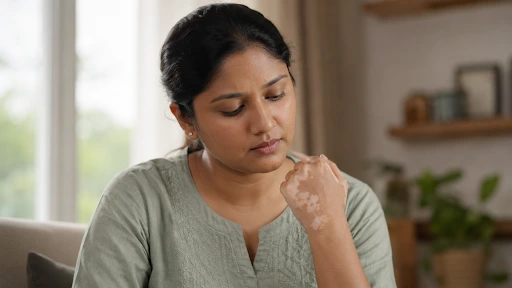
One of the biggest concerns patients have is — “I have been following treatment regularly, so why am I not seeing results quickly?”
The reason is that vitiligo involves the loss or dysfunction of melanocytes — the cells responsible for producing skin pigment. Restoring colour requires these pigment-producing cells to recover, multiply, and gradually spread pigment into affected areas.
Unlike conditions where symptoms disappear once inflammation reduces, vitiligo recovery depends on a biological process that takes time.
Several factors influence the speed of improvement, such as:
- The location of the white patches
- Duration of vitiligo
- Patient age
- Disease activity
- Response to treatment
- Type of treatment used
For instance, facial areas often respond faster compared to areas like fingers, toes, and lips, where repigmentation can be more challenging.
Treatments such as narrowband UVB therapy for vitiligo, topical medications, and advanced procedures like excimer laser therapy work by encouraging melanocyte activity and pigment restoration. However, consistent sessions and regular monitoring are essential.
What’s Happening Beneath the Skin Before Repigmentation Is Even Visible?
During successful treatment, remaining melanocytes around the hair follicles or edges of patches may start becoming active again. These cells slowly produce pigment, which gradually spreads across the affected area.
This early stage may appear as:
- Small brown dots within white patches
- Slight darkening around patch borders
- Uneven colour returning before becoming uniform
These signs can be difficult for patients to identify without professional evaluation. Dermatologists recognise these early indicators and use them to determine whether the treatment is moving in the right direction.
What Methods Do Dermatologists Actually Use to Track Progress?
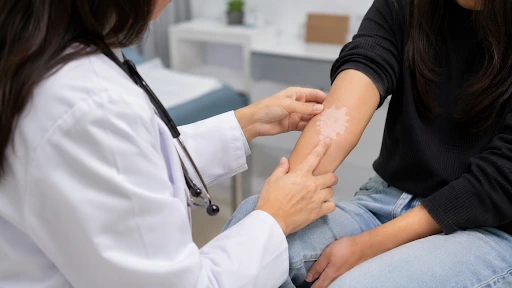
The main methods used by dermatologists to track vitiligo treatment progress include:
- Clinical photography
- Wood’s lamp examination
- Vitiligo scoring systems
- Patient history and symptom tracking
These methods help compare changes over time and provide objective information about vitiligo treatment progress.
How Does Clinical Photography Help Monitor Small Changes Over Time?
Clinical photography is one of the most useful tools for tracking vitiligo improvement.
During follow-up visits, dermatologists may take standardised photographs under similar lighting and angles. These images allow doctors to compare the skin before and after treatment.
This helps identify:
- Reduction in patch size
- New pigmentation development
- Colour improvement
- Changes that are too gradual to notice daily
Many patients search for vitiligo treatment before and after results to understand what improvement may look like. However, every person’s response is different, and photographs are most valuable when they show an individual’s own treatment journey over time.
What Role Does a Wood’s Lamp Examination Play in Tracking Vitiligo?
A Wood’s lamp is a specialised ultraviolet light used by dermatologists to examine skin more closely.
Under this light, vitiligo patches become more visible, helping doctors:
- Identify the true boundaries of affected areas
- Detect subtle pigment changes
- Assess disease activity
- Monitor repigmentation patterns
This examination is especially helpful when patches are difficult to see under normal lighting or when doctors need to determine whether new areas are developing.
Do Dermatologists Use Any Scoring Systems to Measure Repigmentation?
Yes. Dermatologists may use clinical scoring systems to measure vitiligo severity and improvement more objectively. These measurements help doctors track whether treatment is producing meaningful results rather than depending only on appearance.
For patients undergoing narrowband UVB therapy for vitiligo, scoring systems and photographs can be particularly helpful because improvement often happens slowly over several months.
What Happens at a Typical Vitiligo Follow-Up Appointment?
During a vitiligo follow-up visit, a dermatologist usually evaluates:
- Changes in existing white patches
- Appearance of any new patches
- Signs of pigmentation returning
- Side effects or concerns related to treatment
- Patient consistency with medications or therapy sessions
This regular monitoring helps create a personalised vitiligo treatment plan because every patient’s response can be different.
How Often Should Follow-Ups Actually Happen?
The frequency of follow-up visits depends on factors such as disease activity, treatment type, and how quickly the skin is responding.
Generally:
- Patients with active vitiligo may need more frequent monitoring
- Those undergoing phototherapy may require regular reviews to track response and adjust sessions
- Patients with stable disease may have longer intervals between appointments
Regular follow-ups are important because vitiligo can change over time. A treatment that works well initially may need adjustments later depending on the skin’s response.
How Do Dermatologists Tell the Difference Between Stabilising and Actually Improving?
A common misunderstanding among patients is assuming that “no new patches” automatically means the skin is recovering.
However, stabilisation and improvement are two different stages.
Stabilisation means the disease activity has slowed or stopped, while improvement means visible signs of pigment restoration are occurring.
Understanding this difference is important because stable vitiligo can become the foundation for further treatment success.
What Does “Vitiligo Is Stable” Actually Mean?
When dermatologists say vitiligo is stable, it usually means the condition has not shown signs of progression for a certain period.
Signs of stable vitiligo may include:
- No new white patches developing
- Existing patches not increasing in size
- No active pigment loss occurring
Stable vitiligo does not always mean the skin colour has returned. A patient may have stopped spreading but still require treatment to encourage repigmentation.
What Signs Indicate a Treatment Plan Needs to Be Adjusted?
Vitiligo treatment requires patience, but a lack of response over time may indicate that the approach needs to be reviewed.
A dermatologist may consider modifying treatment if:
- No improvement is seen after an appropriate duration
- New patches continue to appear
- Pigmentation is returning very slowly
- Certain areas are not responding
Treatment adjustments may include changing medications, modifying phototherapy schedules, or exploring additional procedures.
For suitable patients, options such as excimer laser therapy may be considered to target smaller or resistant vitiligo patches. These targeted laser treatment options can help stimulate repigmentation in selected areas.
What If One Patch Responds But Another Doesn’t?
It is very common for different areas of the body to respond differently during vitiligo treatment.
For example:
- Facial patches often show faster improvement
- Areas around hair follicles may respond better
- Fingers, toes, and joints may take longer to repigment
This does not always mean the treatment has failed.
The difference occurs because melanocyte availability, blood supply, skin thickness, and the location of patches influence how easily pigmentation returns.
How Do Patients Fit Into This Tracking Process?
Successful vitiligo management is a partnership between the patient and dermatologist.
While doctors evaluate medical progress, patients provide valuable information about daily changes, treatment consistency, and concerns.
Patients can support the tracking process by:
- Following prescribed treatment regularly
- Attending scheduled follow-ups
- Reporting new patches early
- Protecting treated areas as advised
- Maintaining realistic expectations
Should You Be Taking Your Own Progress Photos at Home?
Yes, taking progress photos at home can be helpful when done correctly.
Daily checking in the mirror can make gradual changes difficult to notice. Monthly or periodic photographs can provide a clearer comparison.
However, home photos should support—not replace—professional evaluation. Dermatologists use clinical methods along with patient observations to accurately assess vitiligo treatment progress.
What Realistic Timeline Should You Expect for Visible Improvement?
One of the most common questions patients ask is, “How long does vitiligo treatment take to work?”
The answer depends on several factors, including the treatment method, location of patches, and individual response.
In many cases:
- Early signs of repigmentation may appear after several months
- Consistent phototherapy may require months of sessions
- Complete or significant colour restoration may take longer
For patients undergoing narrowband UVB therapy vitiligo, visible improvement often develops gradually with continued sessions.
Similarly, vitiligo phototherapy results vary from person to person. Some patients may notice pigment returning earlier, while others may need extended treatment periods.
Why Should You Consult a Dermatologist Who Specialises in Vitiligo?
Vitiligo management requires more than identifying white patches. A specialist understands the different stages of the condition, treatment responses, and how to monitor progress accurately.
Advanced treatments, including phototherapy, targeted therapies, and procedures like excimer laser therapy, require proper evaluation to determine suitability.
Choosing Dr Priyanka Aggarwal, a dermatologist in Kolkata specialising in vitiligo, ensures that treatment decisions are based on disease activity, skin response, and individual needs.
What Should You Do Next?
Vitiligo improvement is a gradual journey, and tracking progress requires more than simply waiting to see visible colour changes. Dermatologists use photographs, specialised examinations, scoring methods, and regular follow-ups to understand whether treatment is working.
If you are looking for personalised guidance and advanced vitiligo care, consult Dr Priyanka Aggarwal, the best dermatologist in Kolkata for vitiligo.
Frequently Asked Questions (FAQs)
1. What is the difference between stable and active vitiligo?
Active vitiligo means new patches are appearing or existing patches are spreading. Stable vitiligo means the condition has stopped progressing for a period, although pigmentation may not have returned yet.
2. Can vitiligo repigment on its own without treatment?
In some cases, limited spontaneous repigmentation may occur, especially around hair follicles. However, proper evaluation helps determine whether treatment can improve the chances of pigment restoration.
3. Is phototherapy more effective than topical treatment for vitiligo?
Both treatments can be effective depending on the patient’s condition. Phototherapy is often recommended for widespread vitiligo, while topical treatments may be suitable for smaller affected areas.
4. Why does vitiligo respond better on the face than on hands or feet?
The face often responds better because it contains more active hair follicles that can provide pigment-producing cells. Hands and feet generally have fewer melanocyte reserves, making repigmentation more challenging.
5. When is surgery considered for vitiligo treatment?
Surgical options may be considered for selected patients with stable vitiligo who have not responded adequately to medical treatments.
6. What does it mean if your vitiligo has stopped spreading but hasn’t repigmented yet?
It usually means the disease may have become stable. The next step is often focusing on treatments that encourage pigment recovery under dermatologist guidance.