

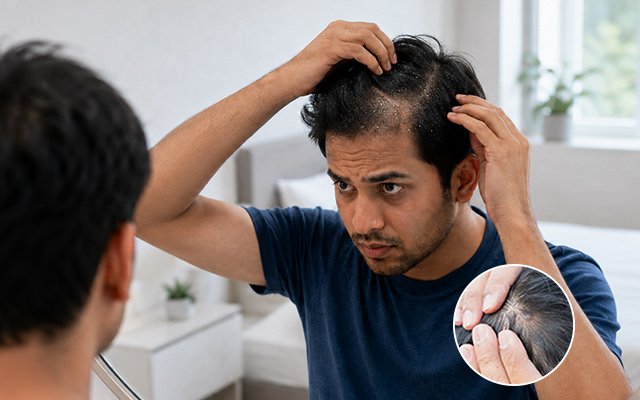
Are You Dealing With Scalp Breakouts, Thinning Hair, and Flaking All at Once?
You notice tiny, painful bumps while combing your hair. Your scalp feels itchy, flakes appear on your clothes, and your hair seems thinner than it used to be. Many people treat these as separate concerns — using an anti-dandruff shampoo for flakes, acne products for scalp bumps, and hair oil for hair fall.
But sometimes, these symptoms may not be separate problems.
Scalp acne, hair thinning, and flaking can be connected signs of an unhealthy scalp environment. When inflammation, excess oil production, infections, or hormonal changes affect your scalp, multiple symptoms may appear together.
Let’s understand what your scalp may be trying to tell you.
Why Do Scalp Acne, Flaking, and Hair Thinning Often Show Up Together?
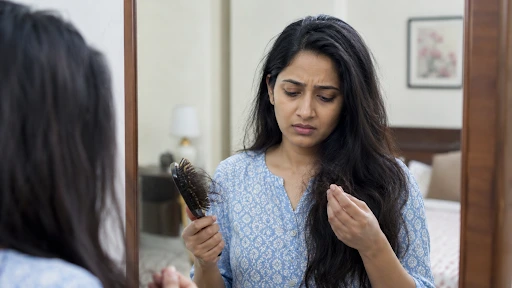
Your scalp is a complex ecosystem where oil glands, hair follicles, skin cells, and microorganisms work together to maintain healthy hair growth.
When this balance is disturbed, it can trigger several issues at the same time — clogged follicles, inflammation, excessive oiliness, irritation, and weakened hair roots.
This is why some people experience scalp acne and hair loss rather than dealing with completely unrelated problems.
Is There a Common Underlying Trigger Behind All Three?
Yes, many cases of scalp acne, flaking, and hair thinning share common triggers.
One major connection is scalp inflammation. When the scalp becomes irritated, inflamed, or infected, it can affect the environment around hair follicles.
This may lead to:
- Blocked hair follicles that cause scalp pimples or acne-like bumps
- Increased oil production leading to greasy flakes
- Weakening of hair roots, resulting in increased shedding
Understanding the actual causes of scalp acne is important because the same trigger affecting your skin may also impact your hair growth cycle.
For example, excessive oil production, microbial imbalance, hormonal fluctuations, and unsuitable hair products can contribute to both scalp breakouts and thinning hair.
Could an Overactive Sebaceous Gland Be Connecting Them?
Sebaceous glands produce sebum, a natural oil that protects the scalp and keeps hair moisturised.
Excess scalp oil may contribute to:
- Scalp acne formation
- Greasy flakes and buildup
- Increased itching and irritation
- Inflammation around hair follicles
Over time, continuous inflammation may disturb normal hair growth and contribute to hair thinning.
What Conditions Could Be Causing All Three Symptoms at Once?
When scalp acne, flaking, and hair thinning appear together, identifying the exact cause becomes important. Several scalp conditions can create this combination of symptoms.
Could It Be Seborrheic Dermatitis?
One common possibility is seborrheic dermatitis of the scalp, an inflammatory condition that affects areas with higher oil production, including the scalp.
Many people confuse seborrheic dermatitis with ordinary dandruff. However, seborrheic dermatitis involves inflammation and may require more targeted management.
When left unmanaged, ongoing scalp inflammation can affect hair follicle health and worsen hair shedding.
Proper scalp condition treatment can help control inflammation, reduce discomfort, and restore scalp balance.
Could a Fungal Infection Be Behind the Flaking and Breakouts?
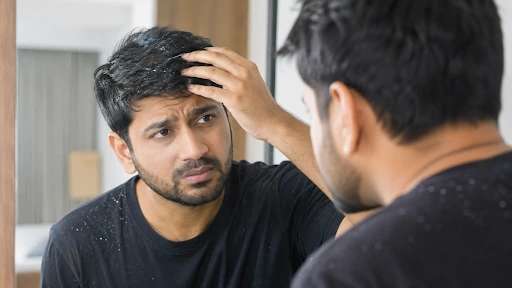
Your scalp naturally contains microorganisms, including fungi. However, when fungal growth becomes excessive, it can disturb the scalp’s natural balance.
Common symptoms of a fungal scalp infection may include:
- Persistent scalp flaking
- Redness and irritation
- Intense itching
- Small bumps or pus-filled spots
- Hair breakage or thinning in affected areas
A fungal infection may look similar to dandruff or scalp acne, making professional evaluation important.
Can Hormonal Imbalances Trigger This Combination?
Hormones influence several functions of your body, including oil production, skin health, and the hair growth cycle.
Changes in hormone levels can increase sebum production, making the scalp oilier and more prone to clogged follicles. This is one reason why scalp acne hormonal causes are often considered when breakouts appear along with hair thinning.
Conditions associated with hormonal imbalance may affect both skin and hair. For example, increased sensitivity to certain hormones can influence hair follicles and gradually make hair appear thinner.
Could It Be a Product Buildup or Contact Irritation Issue?
Sometimes, your hair care routine itself may be contributing to your scalp problems.
Heavy oils, styling products, dry shampoos, and certain chemical ingredients can accumulate on the scalp and block follicles. This buildup may create an environment where scalp acne and irritation develop more easily.
Some people may also experience contact dermatitis due to sensitivity to ingredients such as:
- Artificial fragrances
- Hair dyes
- Preservatives
- Certain styling chemicals
Understanding the causes of itchy, flaky scalp is important because the solution may not always be an anti-dandruff shampoo. Sometimes, removing the irritating trigger is the first step towards restoring scalp health.
How Do You Know If It’s Three Separate Issues or One Connected Condition?
Scalp acne, flaking, and hair thinning can look like separate concerns. However, the way these symptoms appear together can reveal whether they share a common cause.
A dermatologist usually looks beyond individual symptoms and evaluates your complete scalp condition.
What Patterns Should You Look For?
Certain patterns may indicate that your scalp concerns are connected:
- Scalp acne appearing along with increased hair shedding
- Flakes accompanied by itching or redness
- Hair thinning occurring in areas with scalp irritation
- Symptoms returning despite trying multiple products
- Scalp becoming more oily before breakouts appear
For example, dandruff and hair thinning can sometimes occur together because persistent scalp inflammation may affect the health of hair follicles.
Why Do Regular Shampoos and Home Remedies Often Fail to Fix This?
When scalp problems continue, many people start experimenting with different shampoos, oils, and home remedies. But the problem often returns because these solutions may only manage surface symptoms.
For example:
- Anti-dandruff shampoos may reduce flakes temporarily but may not address inflammation.
- Hair oils may worsen buildup in some people with oily scalps.
- Facial acne products may not be suitable for scalp skin.
The right scalp acne treatment depends on what is actually causing the problem — whether it is fungal activity, inflammation, hormonal imbalance, or product irritation.
What Does a Dermatologist Actually Check For in Cases Like This?
When you consult a dermatologist for scalp acne, flaking, and hair thinning, the evaluation usually involves a detailed examination of your scalp and hair pattern.
A specialised examination can help differentiate between:
- Dandruff
- Seborrheic dermatitis
- Fungal infections
- Scalp acne
- Hair loss disorders
- Product-related irritation
This helps create a treatment plan based on the actual cause instead of treating symptoms randomly.
What Treatment Options Address the Root Cause Instead of Just Symptoms?
A dermatologist may recommend a combination of approaches, such as:
- Medicated shampoos for scalp conditions
- Anti-inflammatory treatments
- Antifungal medications for infections
- Products to regulate excess oil production
- Hair-focused treatments to support follicle health
For people experiencing ongoing hair thinning, personalised hair thinning treatment can help address factors affecting hair density and improve scalp health.
How Long Does It Take to See Real Improvement?
The improvement timeline depends on the cause and severity of the condition.
Some symptoms, such as itching and excessive flaking, may improve within a few weeks after starting the right treatment.
However, hair-related changes usually take longer because hair follows a natural growth cycle. You may need consistent care for several months to notice visible improvement.
When Should You Stop Self-Treating and See a Specialist?
Consider consulting a dermatologist if you experience:
- Scalp acne that keeps coming back
- Increasing hair thinning
- Persistent flakes despite treatment
- Painful scalp bumps
- Severe itching or redness
- Patchy hair loss
- Symptoms affecting your confidence
For personalised evaluation and advanced scalp care, consult Dr Priyanka Aggarwal, the best skin doctor in Newtown, who provides expert solutions for various skin, hair, and scalp-related concerns.
Your Scalp Symptoms May Be Connected — Finding the Cause Is the First Step
Scalp acne, flaking, and hair thinning may appear like separate issues, but they can sometimes share the same underlying trigger.
Ignoring recurring scalp problems or relying only on home remedies may provide temporary relief but may not solve the actual cause.
If you are experiencing persistent scalp breakouts, itching, flaking, or hair thinning, consider expert evaluation.
Book a consultation with Dr Priyanka Aggarwal, the best skin doctor in Newtown.
Frequently Asked Questions
1. Can scalp acne and hair thinning be caused by the same condition?
Yes. Scalp acne and hair thinning can sometimes occur together due to inflammation, clogged follicles, infections, hormonal changes, or scalp imbalance. Identifying the underlying cause helps in choosing the right treatment.
2. Is flaking always dandruff, or could it be something else?
No. Flaking may occur due to several conditions, including seborrheic dermatitis, fungal infections, psoriasis, product irritation, or other scalp disorders.
3. What is seborrheic dermatitis and how is it different from dandruff?
Seborrheic dermatitis is an inflammatory scalp condition that causes flaking, redness, itching, and irritation. Dandruff is usually milder and mainly involves scalp flaking without significant inflammation.
4. Can a fungal infection on the scalp cause hair thinning?
Yes. Certain fungal infections can affect hair follicles, leading to breakage, inflammation, and temporary hair thinning if not treated properly.
5. Are hormonal imbalances linked to scalp acne and hair loss?
Yes. Hormonal changes can influence oil production, scalp acne formation, and the hair growth cycle, making them possible contributors to both breakouts and hair thinning.
6. Why do your scalp symptoms come back after using anti-dandruff shampoo?
Anti-dandruff shampoos may reduce visible flakes but may not address deeper causes like inflammation, fungal imbalance, hormonal triggers, or product irritation.
7. Do you need a scalp biopsy to diagnose these symptoms?
Not usually. Most scalp conditions can be diagnosed through examination. A biopsy may only be recommended when the cause of hair loss or scalp inflammation is unclear.
8. Can stress cause scalp acne, flaking, and hair thinning together?
Stress can affect hormones, inflammation levels, oil production, and the hair growth cycle. It may worsen existing scalp conditions and increase hair shedding.