Home / Treatments / Skin Treatments / Psoriasis
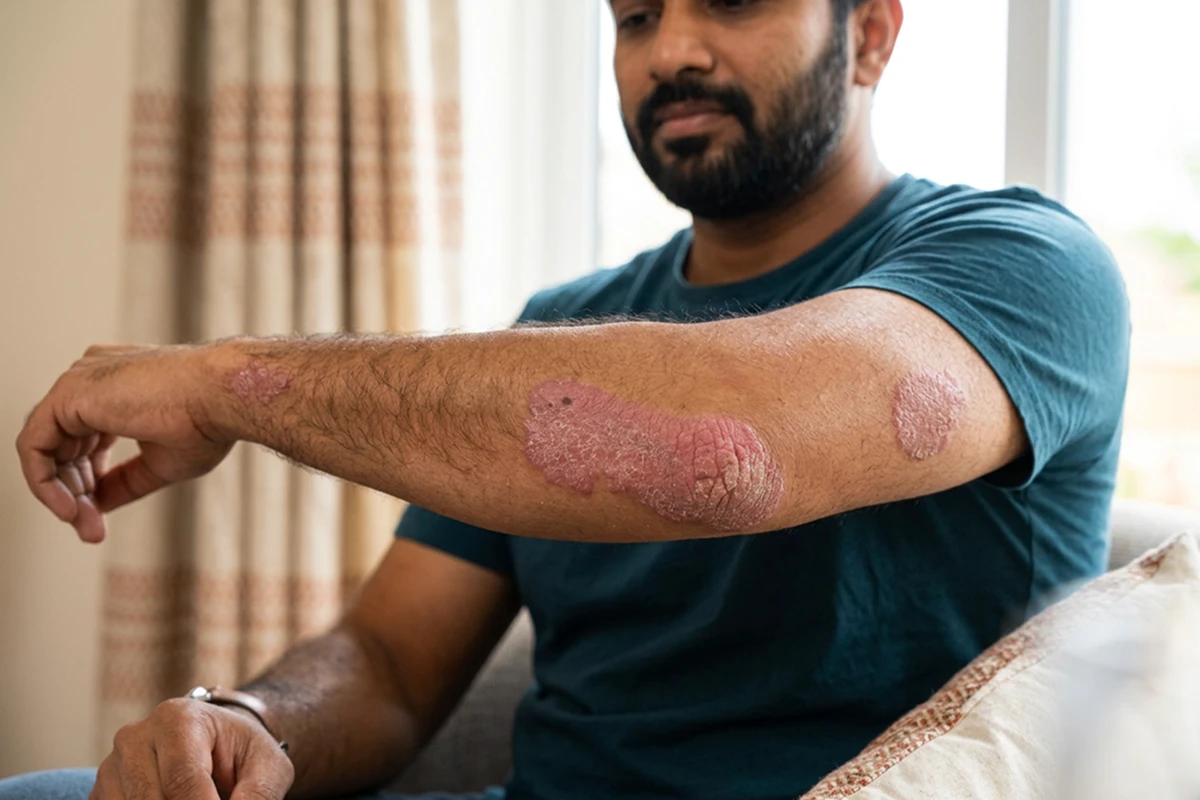
Psoriasis is one of those skin conditions that refuses to be subtle. Red patches show up, itching starts, and the flaking can get hard to ignore. It’s a long-term skin condition where skin cells build up faster than usual, forming thick, dry, and scaly areas. Treatment focuses on calming the irritation, slowing down this buildup, and helping your skin feel more balanced and comfortable again.
Your skin deserves more than temporary relief—it deserves the right care that addresses the root of the problem. Dr Priyanka Aggarwal, a dermatologist, cosmetologist, and vitiligo specialist, focuses on personalised psoriasis treatment that helps calm inflammation, manage flare-ups, and support long-term skin health.
Psoriasis treatment focuses on bringing balance back to skin that’s been a little overactive. It is planned based on how severe the condition is and which areas are affected. The treatment usually involves a combination of medicated creams to reduce scaling and irritation, phototherapy to slow down excess skin cell growth, and in some cases, oral or injectable medications to control the immune response. The focus is to reduce flare-ups, improve skin comfort, and maintain healthier skin over time.
If you are struggling with persistent patches, itching, or recurring flare-ups, consult Dr Priyanka Aggarwal, who offers personalised dermatological care to help manage psoriasis effectively.
After psoriasis treatment, think of your skin as being in recovery mode. Keep it well moisturised, follow the dermatologist’s advice regularly, and use gentle skincare products that support healing. Staying hydrated, managing stress, and protecting your skin from excessive sun exposure can also help maintain the results and reduce the chances of flare-ups returning.
Avoid harsh soaps, aggressive scrubbing, or experimenting with random skincare products that may irritate your skin. Do not pick or scratch healing patches, even if itching appears. Skipping prescribed medicines or stopping treatment suddenly can trigger flare-ups again, so consistency in care is key for keeping psoriasis under control.
| Psoriasis Problems | How Psoriasis Treatment Helps |
|---|---|
| Persistent itching and irritation that disrupts daily comfort | Treatment helps reduce inflammation and soothe the skin, relieving constant itching |
| Red, thick, scaly patches appearing on different parts of the body | Medications and topical therapies slow down excess skin cell growth and reduce scaling |
| Dry, cracked skin that may bleed or feel painful | Proper treatment supports skin hydration and promotes healing of damaged skin |
| Frequent flare-ups that keep returning over time | Psoriasis treatment helps control immune responses and reduces the frequency of flare-ups |
| Skin discomfort affecting confidence and daily activities | Managing symptoms improves skin appearance and helps restore comfort and confidence |